Choosing the right Small Electric Motor can determine whether a machine runs smoothly or fails early. The decision involves more than voltage and price. Speed, torque, load type, duty cycle, noise, heat, and available space all matter. A motor turning at 3,000 revolutions per minute may appear powerful, yet struggle when starting a heavy conveyor. A slower motor with higher starting torque could perform better.
Practical selection begins with the equipment’s real working conditions. Measure the required shaft speed and torque, then check the motor’s continuous and peak ratings. Consider gearboxes, controllers, mounting points, airflow, and expected operating hours. A compact motor inside a sealed enclosure may need better thermal protection. Dust and vibration can also shorten its service life. Manufacturer datasheets, recognized testing methods, and supplier support provide useful evidence, but specifications should never replace application testing.
Real machines behave imperfectly. Friction changes. Loads fluctuate. Wiring losses are easy to overlook. A calculation that looks correct may still produce excessive heat during startup. Testing a sample motor under realistic conditions can reveal these weaknesses before production begins. Engineers should record temperature, current, noise, and performance over time. The “best” Small Electric Motor is not always the smallest or cheapest option. It is the motor that delivers dependable performance, suitable efficiency, and safe operation within the complete system. Careful judgment matters.
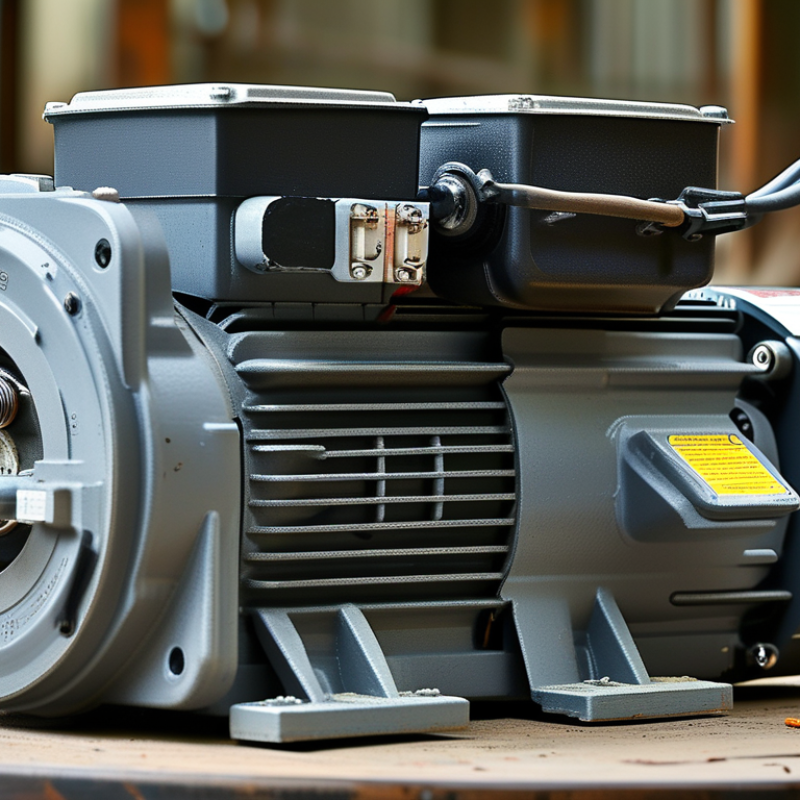
Choosing a small electric motor starts with the application, not the catalog.
Describe the actual movement. Will the motor lift, rotate, feed, pump, or position a load? Record the required speed, torque, travel distance, and operating time. A conveyor moving 2 kilograms differs greatly from a valve turning once per hour. Measure the load during startup, not only during normal operation. Starting torque can be several times higher than running torque. That detail is often missed.
Check the available voltage, current limit, mounting space, shaft size, and control method. Note whether the motor runs continuously or in short cycles. A motor operating for five seconds may need different thermal protection than one running for eight hours. Ambient heat, dust, moisture, vibration, and noise also affect the selection. In a warm enclosure, cooling may be limited. Plan for that.
I once treated a light mechanism as a steady load. It stalled when friction increased. The calculation looked acceptable, but the real conditions were not. Leave a sensible torque margin, while avoiding excessive oversizing. A larger motor may consume more energy and respond less precisely. Test a sample under the heaviest realistic load, including startup and repeated cycles. Record temperature, noise, speed stability, and current after several hours. Small differences become important in production. Heres where careful testing matters most.
Choosing a small electric motor starts with the load, not the catalog photograph. Measure required speed, torque, operating time, and available space. A brushed DC motor suits simple, low-cost equipment with variable speed control. Its brushes wear over time. A brushless DC motor usually delivers better efficiency, quieter operation, and longer service life. It needs an electronic controller, however. An AC induction motor works well for steady-speed equipment connected to an alternating-current supply. A stepper motor offers accurate positioning, but it can lose torque at higher speeds.
Power ratings need careful interpretation. Rated power describes continuous output under stated conditions, not guaranteed performance in every installation. Check both rated torque and starting torque. A motor may reach its listed wattage while overheating in a cramped enclosure. I have seen small motors fail because designers matched wattage alone. That shortcut looked reasonable, but it ignored duty cycle and cooling.
Compare efficiency across the expected speed range. Check noise, vibration, stall behavior, controller compatibility, and shaft load. For intermittent motion, calculate the heating effect of repeated starts and stops. For continuous operation, allow thermal margin rather than selecting the smallest possible motor. Environmental details matter too. Dust, moisture, shock, and mounting direction can change performance. Datasheets are useful, but real testing remains necessary. A brief load test may reveal unstable speed or unexpected heat. Leave room for doubt.
How to Choose the Right Small Electric Motor?
Select the Correct Voltage, Speed, Torque, and Control Method
Choosing a small electric motor starts with the machine’s real operating conditions. Check the available supply voltage before comparing motor sizes. A motor rated for 12 volts should not receive 24 volts without suitable regulation. Excess voltage can create heat, noise, and early failure.
Speed is equally important. Read the required revolutions per minute at the working load, not only at no-load conditions. Measure under load. Not at idle. A motor may reach 3,000 rpm on a datasheet but slow sharply when connected to a belt or gear train. Use a gearbox when the application needs lower speed and higher shaft torque. Remember that gearing introduces losses, so calculate the output torque with a practical efficiency margin.
Torque selection requires more than matching the average resistance. Identify starting torque, running torque, and occasional peak loads. A conveyor may need extra force when heavily loaded. Select a motor with some reserve, but avoid excessive oversizing, which can increase cost and power consumption. Small errors matter.
The control method should match the motor and the user’s needs. Simple on-off control suits basic mechanisms. Pulse-width control can adjust speed, but poor settings may cause audible noise or uneven motion. Closed-loop control provides better speed accuracy when load changes frequently. In workshop testing, check temperature after continuous operation and inspect current during startup. A quick choice can be wrong. Recheck the figures.
| Application Requirement | Typical Motor Type | Common Supply Voltage | Typical Speed Range | Typical Continuous Torque | Recommended Control Method | Key Selection Considerations |
|---|---|---|---|---|---|---|
| Low-speed positioning | Brushed DC gear motor or brushless DC gear motor | 6–24 V DC | 10–300 rpm | 0.2–10 N·m | PWM speed control; H-bridge for reversible operation; encoder feedback for accurate positioning | Choose a gear ratio that provides the required output speed and torque. Check gearbox efficiency and backlash. |
| Compact fan or blower | Brushless DC motor | 5–24 V DC | 2,000–12,000 rpm | 0.005–0.08 N·m | Voltage control, PWM control, or integrated electronic commutation | Match the motor to the fan load, airflow target, static pressure, noise limit, and required operating life. |
| Small pump | Brushed DC motor, brushless DC motor, or shaded-pole AC motor | 12–24 V DC or 100–240 V AC | 1,500–6,000 rpm | 0.02–0.5 N·m | PWM or voltage control for DC motors; phase-angle or variable-frequency control where compatible with AC motors | Consider starting torque, duty cycle, fluid viscosity, pressure, flow rate, and protection against stall or dry running. |
| Conveyor or roller drive | DC gear motor or brushless DC gear motor | 12–48 V DC | 20–500 rpm | 0.5–20 N·m | PWM with current limiting; closed-loop speed control for consistent conveyor velocity | Calculate torque from belt force and roller radius. Include acceleration torque and a service factor for intermittent loads. |
| Precision motion and indexing | Stepper motor or brushless servo motor | 12–48 V DC | 100–3,000 rpm | 0.05–5 N·m | Microstepping driver for open-loop motion; encoder-based servo control for closed-loop positioning | Verify position accuracy, load inertia, acceleration, resonance behavior, and whether holding torque is required at standstill. |
| Small actuator or linear mechanism | DC gear motor with screw drive or integrated linear actuator motor | 12–36 V DC | 5–250 rpm | 0.5–15 N·m | H-bridge with limit switches; encoder feedback for position control | Convert linear force to motor torque using the screw lead and efficiency. Check end-of-travel limits and self-locking requirements. |
| High-speed spindle or small tool | Brushless DC motor or AC induction motor | 24–48 V DC or 100–240 V AC | 5,000–30,000 rpm | 0.01–0.3 N·m | Electronic speed controller for BLDC motors; variable-frequency drive for compatible AC motors | Prioritize bearing speed rating, rotor balance, cooling, vibration, and power required at the target operating speed. |
| Battery-powered portable equipment | Brushed DC or brushless DC motor | 3.7–24 V DC | 500–15,000 rpm | 0.005–2 N·m | PWM control with undervoltage protection; sensorless or sensored electronic commutation for BLDC motors | Compare motor efficiency, no-load current, stall current, battery capacity, thermal performance, and expected runtime. |
| Continuous industrial operation | Brushless DC motor or AC induction motor | 24–48 V DC or 100–240 V AC | 900–3,600 rpm | 0.1–10 N·m | Closed-loop speed control, current limiting, and thermal protection | Select a motor with an appropriate continuous-duty rating, adequate cooling, and sufficient torque margin at the operating point. |
| Quiet consumer equipment | Brushless DC motor or electronically commutated motor | 5–24 V DC or 100–240 V AC | 500–8,000 rpm | 0.005–0.5 N·m | Soft-start PWM, sinusoidal commutation, or closed-loop speed control | Evaluate acoustic noise, vibration, commutation frequency, bearing quality, airflow, and speed stability. |
| Selection note: Motor torque and speed are related to power by P = T × ω. Choose the motor using the actual operating speed and load torque, then add a practical torque margin—commonly 20–30% for steady loads and more for frequent starts, acceleration, shock loads, or uncertain conditions. Always verify stall current, driver limits, thermal performance, duty cycle, and mechanical mounting requirements. | ||||||
Choosing the right small electric motor starts with the installation, not the catalog.
Measure the available envelope, shaft height, bolt pattern, and cable path. A motor that fits the housing may still fail during maintenance. Confirm torque at the actual load, including startup friction and short overloads.
Select an efficient motor, but compare performance across the expected load range, not only at rated power.
Mounting errors create vibration, noise, and premature bearing wear.
Check whether the motor needs face, flange, or foot mounting. Then inspect alignment with a straightedge or dial indicator. Small differences matter.
The IEC 60034-9 standard provides acoustic guidance for rotating electrical machines; however, measured noise depends on the enclosure, controller, fan, and surrounding structure.
In a prototype, record noise at one meter and under real operating speed.
Heat management is often underestimated.
Copper losses, friction, switching, and restricted airflow raise winding temperature. The International Energy Agency estimates that electric motor systems use roughly half of global electricity, making efficient thermal design important at scale.
Leave clearance around ventilation openings, avoid sealing a hot motor inside foam, and consider a temperature sensor near the winding.
Test the complete assembly for an hour, measure the housing temperature, and revisit the choice before production.
How to Choose the Right Small Electric Motor?
A small motor deserves more than a quick price comparison. I once selected a motor by wattage alone. That shortcut failed when heat, noise, and frequent restarting appeared. Check the duty cycle, load profile, insulation class, enclosure rating, and bearing quality. The International Energy Agency reports that motor-driven systems consume about 46% of global electricity. Efficiency is therefore a practical operating issue, not just a specification. The U.S. Department of Energy also identifies motors as major industrial electricity users. Verify efficiency through recognized test methods, such as IEC 60034-2-1 or IEEE 112.
Safety must fit the installation. Confirm compliance with relevant IEC requirements, including IEC 60034-1 and IEC 60204-1. Check overload protection, grounding, temperature limits, and electromagnetic compatibility. A motor with an IP rating unsuitable for dust or moisture may fail early. Reliability also depends on real conditions. Starting frequency, vibration, ambient temperature, and shaft alignment matter. Cheap can be expensive. Compare total ownership cost, including energy, downtime, replacement parts, and technician hours. The DOE’s motor-system guidance recommends evaluating lifecycle cost rather than purchase price alone.
Tips: Request efficiency test records, dimensional drawings, warranty terms, and maintenance instructions. Ask how the motor performs under your actual load, not an ideal laboratory load. Keep a sample unit running for several days when possible. Listen for bearing noise. Measure surface temperature. Review maintenance intervals carefully. Some recommendations look precise, but field conditions can prove otherwise. A simple log of current, temperature, and vibration often reveals problems before failure.
Verify reliability, safety standards, cost, and maintenance needs before selecting a motor.
: Start with the load, speed, torque, duty cycle, and available space. Measure twice. A simple brushed motor suits basic, low-cost equipment. A brushless motor usually runs more quietly and efficiently. An alternating-current motor fits steady-speed equipment. A stepper motor provides accurate positioning but may lose torque at high speed.
No. Rated power describes continuous output under stated conditions. It does not guarantee every installation will perform similarly. Check rated torque, starting torque, operating time, and cooling. A motor can reach its wattage while overheating inside a tight enclosure. I once trusted wattage alone. That choice ignored heat and repeated starts.
Measure the housing space, shaft height, bolt pattern, and cable path. Confirm the mounting style and service access. Check alignment with a straightedge or dial indicator. Small alignment errors can create vibration and bearing wear. The motor may fit. Maintenance may not.
Compare efficiency across the expected speed and load range. Do not rely only on the rated-power figure. Review current draw, heat, and performance during actual operation. A laboratory result may differ in a dusty machine. Use a short load test. Record temperature and speed.
Check the motor, controller, fan, enclosure, and mounting structure together. Each part can change the final sound level. Measure noise at one meter during real operation. Listen for bearing noise and unstable speed. “Quiet” is too vague. Ask for measured sound data.
Leave space around ventilation openings. Avoid sealing a hot motor inside foam or a cramped enclosure. Copper losses, friction, switching, and repeated starts can raise winding temperature. Place a temperature sensor near the winding when practical. Heat still matters. Test the complete assembly for about one hour.
Dust, moisture, shock, ambient temperature, and mounting direction can change performance. Check the enclosure rating for the installation. Review shaft alignment and starting frequency. Frequent starts may create more heat than continuous running. Field conditions are messy. Plan for them.
Compare purchase price, energy use, downtime, replacement parts, and technician time. A cheaper motor may cost more during operation. Request drawings, efficiency records, warranty terms, and maintenance instructions. Keep a sample running for several days when possible. Log current, temperature, and vibration. The checklist is useful, but it is not perfect.
Choosing the right Small Electric Motor begins with a clear understanding of the application and operating environment. Consider the required workload, duty cycle, available space, temperature, and expected operating conditions. Compare suitable motor types by examining power ratings, efficiency, starting performance, speed stability, torque output, and response characteristics. The selected motor should match the system’s voltage, target speed, torque requirements, and preferred control method, whether simple switching, variable-speed control, or automated operation.
Physical and practical factors are equally important. Check the motor’s dimensions, mounting arrangement, weight, noise level, vibration, and ability to release heat effectively. A properly sized motor can improve performance while reducing energy waste and premature wear. Before making a final decision, verify reliability, applicable safety standards, installation requirements, total cost, and maintenance needs. Evaluating these factors together helps ensure that the Small Electric Motor delivers dependable performance, fits the equipment correctly, and remains economical throughout its service life.

YWOO Motor