Choosing the right Linear Actuator manufacturer can shape a product’s safety, service life, and operating cost. Global buyers often compare suppliers across different markets, standards, and production capabilities. A strong manufacturer should provide clear specifications, stable quality, responsive support, and practical customization options. Performance matters. Details decide.
This guide examines leading Linear Actuator manufacturers through an evidence-based purchasing perspective. It considers motor types, load capacity, stroke length, speed, duty cycle, noise levels, and ingress protection. Factory experience also matters, especially when actuators must operate in medical equipment, industrial automation, agricultural machinery, or adjustable furniture. Reliable suppliers normally share test methods, material details, inspection records, and product drawings. Certifications can support confidence, but they should not replace independent technical evaluation.
Real-world suitability is more important than impressive brochures. A compact actuator may look efficient, yet struggle under continuous loads or uneven mounting. A low-cost model may reduce initial spending, but increase replacement risks later. No ranking is perfect. Supplier capabilities change, and published information may become outdated. Buyers should verify current certifications, sample performance, warranty terms, and lead times before signing contracts. Questions about after-sales service deserve equal attention. A dependable partner explains limitations honestly, not only advantages. This overview aims to help procurement teams compare manufacturers with greater confidence, clearer technical judgment, and fewer costly assumptions.
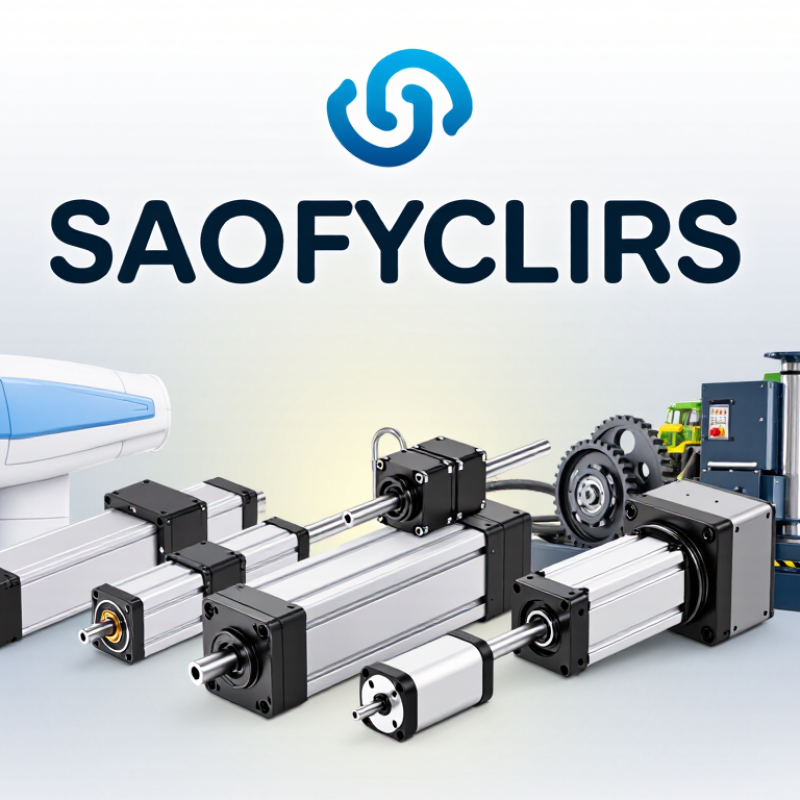
Linear actuators convert rotary motion or fluid pressure into controlled straight-line movement. Electric screw actuators suit adjustable desks, inspection equipment, and automated production fixtures. Hydraulic models deliver high force for heavy platforms, while pneumatic cylinders move quickly in simpler, repetitive systems. Telescopic designs fit installations where retracted length is limited. Each type brings trade-offs in control, noise, maintenance, and installation space.
Core performance features include rated force, stroke length, speed, duty cycle, and positioning accuracy. A 300-millimeter stroke may be sufficient for a machine guard, but not for a lifting table. Check whether force ratings describe static loads, moving loads, or both. Also review backlash, side-load limits, operating temperature, and ingress protection. These details matter when an actuator sits near washdown areas, dust, or vibration.
For global purchasing, compare the full operating conditions, not just the headline force. Confirm voltage, mounting dimensions, feedback options, cable routing, and expected service intervals with the supplier. A quiet test-bench unit can behave differently after hours of repeated use. Specifications are useful, but real duty-cycle data is better. Even a careful selection can miss a detail; measure the available space and load path before finalizing the design.
| Actuator Type | Motion and Drive | Common Applications | Core Performance Features | Key Selection Considerations |
|---|---|---|---|---|
| Lead-screw electric | An electric motor turns a threaded screw to move a nut and attached load in a straight line. | Adjustable furniture, access panels, laboratory equipment, and light-duty positioning. | Provides controlled positioning and can offer good resistance to back-driving, depending on screw design and load. | Check duty cycle, load, stroke, screw efficiency, noise, and whether a brake or position feedback is needed. |
| Ball-screw electric | A recirculating ball nut travels along a rotating screw, reducing sliding friction. | CNC machinery, automation equipment, inspection systems, and precision positioning axes. | Typically offers high mechanical efficiency, repeatable motion, and suitability for frequent positioning. | Account for lubrication, contamination protection, screw critical speed, backlash, and holding requirements. |
| Belt-driven electric | A motor drives a belt and carriage along a linear guide or extrusion. | Packaging lines, pick-and-place systems, material handling, and long-travel automation. | Can provide fast movement and long strokes; positioning accuracy depends on belt, drive, and feedback design. | Evaluate travel length, payload, acceleration, belt stretch, guidance, and required positioning accuracy. |
| Pneumatic cylinder | Compressed air acts on a piston to produce linear extension or retraction. | Clamping, sorting, machine guarding, and other repetitive industrial operations. | Simple, fast, and widely used where compressed air is available; end-to-end motion is common. | Size for pressure, bore, stroke, load, cushioning, air quality, and the control needed for intermediate positions. |
| Hydraulic cylinder | Pressurized hydraulic fluid drives a piston inside a cylinder. | Mobile machinery, lifting equipment, presses, and other high-force applications. | Can deliver high force from a compact cylinder; motion and force can be controlled with a suitable hydraulic circuit. | Consider pressure, rod buckling, seals, fluid temperature, leakage control, and power-unit requirements. |
| Piezoelectric actuator | An electric field causes a piezoelectric material to deform, producing very small movements. | Optics, microscopy, precision alignment, and vibration control. | Supports very fine, rapid motion and high-resolution positioning; useful travel is generally limited without amplification. | Check required travel, preload, voltage, control electronics, temperature effects, and position-sensor needs. |
| Telescopic electric actuator | Nested sections extend to create a long stroke from a comparatively short retracted length. | Vehicle equipment, adjustable platforms, access systems, and space-constrained installations. | Combines compact retracted dimensions with extended reach; load capacity and stability depend on configuration. | Verify stroke, retracted length, side-load limits, mounting geometry, environmental rating, and duty cycle. |
Selection note: Performance depends on the specific design, size, operating conditions, and control system. Compare rated load, stroke, speed, duty cycle, accuracy, protection rating, and required certifications using the product data sheet for each application.
It converts rotary motion or fluid pressure into controlled straight-line movement. It can lift, push, pull, or adjust equipment.
Electric screw models suit adjustable desks and production fixtures. Hydraulic models provide high force for heavy platforms. Pneumatic cylinders move quickly in repetitive systems. Telescopic designs fit spaces with limited retracted length.
Review force, stroke length, speed, duty cycle, and positioning accuracy. Also check backlash, side-load limits, temperature range, and ingress protection. Small gaps matter.
Confirm whether the rating applies to static loads, moving loads, or both. A headline force alone may not reflect real operating conditions.
Test a sample under load in the intended mounting arrangement. Run several cycles and note changes in speed or sound. Measure twice.
Check mounting dimensions, available space, load path, voltage, feedback options, and cable routing. A careful selection can still miss one detail.
Ask for comparable cycle-test results, dimensional inspection records, and traceability for critical components. Review engineering support, production capacity, and nearby replacement-part access.
No. A certification can indicate a quality system, but product-specific test records matter more for your application. Not always. A tidy scorecard can still miss shipping delays or inconsistent performance.
Choosing the right Linear Actuator manufacturer requires more than comparing prices. Buyers should first understand the actuator types available, their operating principles, and how factors such as load capacity, stroke length, speed, duty cycle, and environmental resistance affect performance in different applications. These requirements help narrow the options and establish clear criteria for evaluating potential suppliers.
A thorough comparison should consider product quality, customization capabilities, relevant certifications, production capacity, and the manufacturer’s ability to support international procurement. Communication, quality control, delivery planning, and after-sales service also influence the reliability of a long-term partnership. By matching technical requirements with a supplier’s manufacturing strengths and support capabilities, global buyers can make a more informed choice and select a partner suited to their application, project schedule, and future needs.

 YWOO Motor